5 Ways to Maximise Recycling
With over half of recyclable material still going to landfill or incineration, local authorities can play a vital role by implementing some targeted, evidence based actions.
Let’s cut to the chase – any way of dealing with waste that isn’t through recycling or reuse costs a lot more money. That’s frustrating given we know that over half of what we’re sending to incineration and landfill is recyclable material. But we also know that fine-tuning local recycling collections, and getting the right balance of infrastructure, service and communications to get everyone putting stuff in the right place can feel a bit like trying to crack a safe at times. It’s a tricky balance.
5 ways to Maximise Recycling
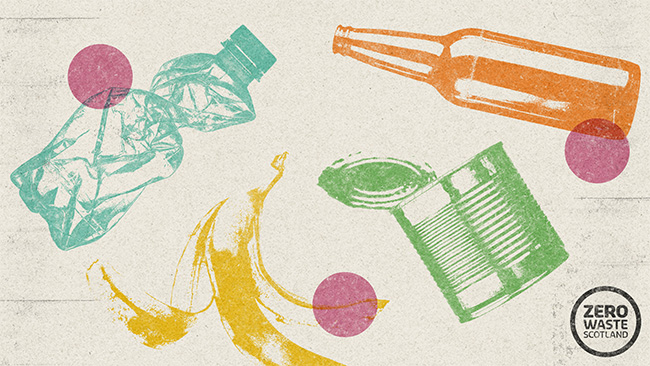
This infographic collects together the top 5 findings from a range of new reports, looking at different aspects of maximising recycling.
It gives a visual summary of highlights from studies looking at:
- Increasing food waste collection yields and participation
- Collecting new materials at kerbside, including batteries, WEEE, flexible plastics and textiles
- Performance-improving measures for HWRCs, including black bag sorting and booking
- Optimum ways to collect organic waste
- Best practice in communications


Finding 1: Sticker your residual bins to keep food waste out
Sometimes really simple actions can have a surprisingly significant impact. It turns out that merely popping a sticker saying ‘No Food Waste’ on the residual bin has a transformational and lasting effect on increasing food waste recycling. In our trial in South Ayrshire the number of households participating in food waste recycling increased by 7.7% and the amount of food waste placed in caddies increased by 42%.
Finding 2: Keep food and garden waste separate
Separate food waste collections consistently deliver higher capture rates than mixed organics services. Free garden waste collections improve recycling performance but may be financially unviable for many councils.
A hybrid model - separate food waste with charged garden waste - offers near-equivalent recycling performance to fully free services, while saving over £36 million annually across Scotland.


Finding 3: Introduce bag sorting, training and booking to boost HWRC recycling rates
Local authorities can achieve the greatest improvement in recycling performance by introducing a black bag sorting policy, which could increase HWRC recycling and reuse rates by over 10%.
Regular staff training is the second most effective intervention, boosting recycling and reuse rates by around 7%, as trained staff better guide residents and reduce contamination.
While booking systems and reuse containers offer smaller gains (around 1–3%), they can complement other measures by improving site efficiency and promoting reuse, moving materials up the waste hierarchy.
Finding 4: Start collecting new materials
Start collecting flexible plastics, textiles, batteries and Waste Electrical and Electronic Equipment (WEEE).
Getting all of these, and especially flexible plastics, out of your residual waste and collected for recycling will make a huge impact on decarbonising what you’re sending for incineration, with huge associated savings under the Emissions Trading System (ETS).


Finding 5: Tell residents what the material will become
59% of residents surveyed in urban areas said they wanted more information from their council on recycling, with most people saying they wanted to know what happens to waste once collected, and what products it is turned into.
We have two new best practice guides to help councils communicate as effectively as possible, available to read below.
Read the reports
- Report
- Evidence & Insights


- Report
- Evidence & Insights