ReVentas: A Scottish plastics recycling company with global ambitions for its ‘dissolution’ technology
ReVentas is a Scottish plastics recycling company with ambitious plans to deploy its dissolution recycling technology through a network of reprocessing facilities around the world.
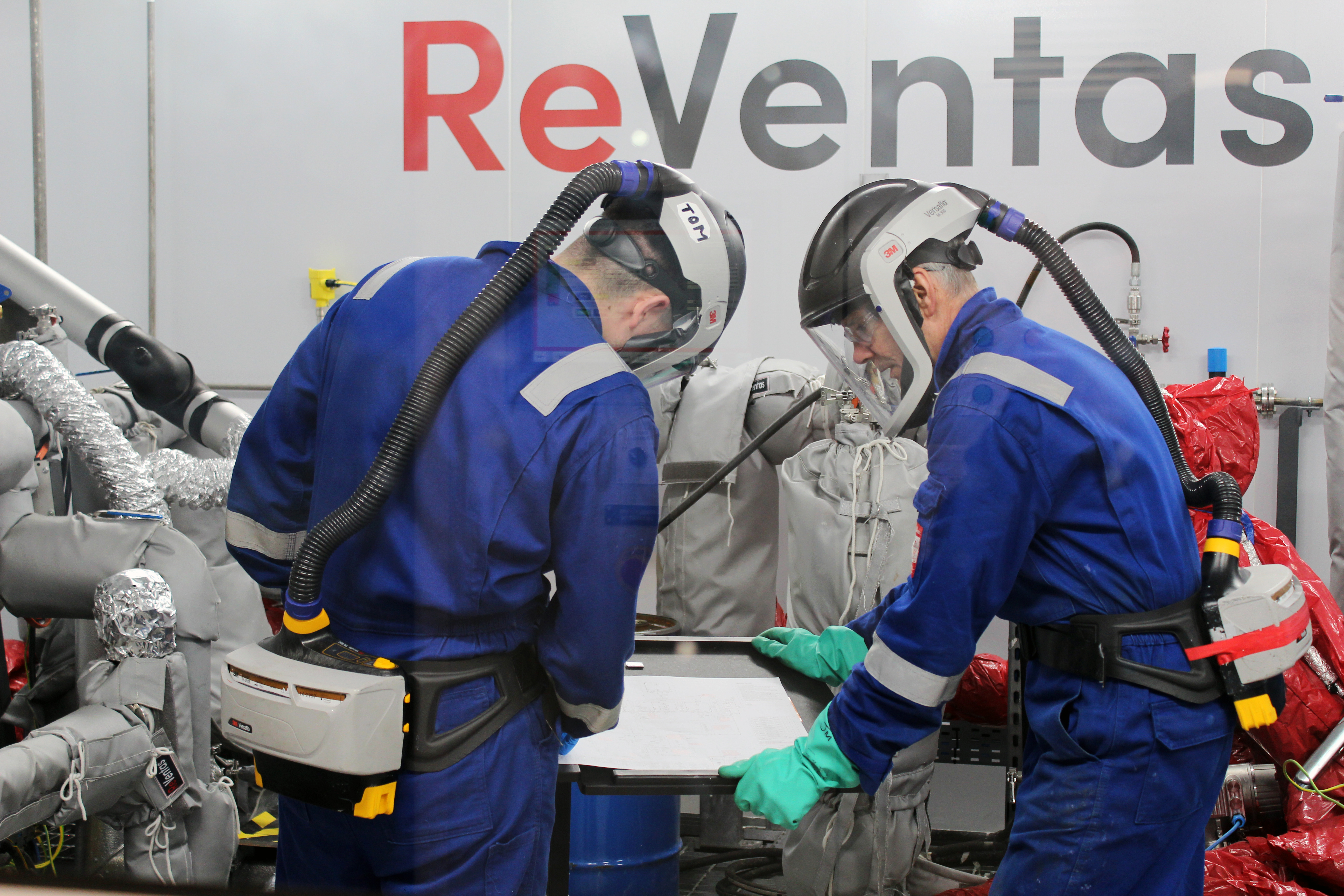
Founded in 2020, the Livingston-based company has spent the last six years developing and scaling up its dissolution recycling technology and is now preparing for commercial deployment, with Scotland amongst the locations being considered for its first large-scale facility.
Journey
A major milestone came shortly after the company was established, when it secured funding through the Horizon 2020 European Innovation Council (EIC) Accelerator programme. According to founder and CEO Tom Rose, the grant "really launched us from taking what we developed in the lab and turning that into a pilot plant".
Since then, the company says it has refined the technology, demonstrated it across a range of feedstocks and continued to scale up its Livingston-based pilot facility. In July 2026, ReVentas secured a further £3.5 million grant from Scottish Enterprise as part of a £9 million project aimed at accelerating development of the technology and expanding its capability to process more complex waste streams.
"We've proven the technology in a whole range of feedstocks," says Tom. "Now we are moving into the commercial growth phase of our business."
Scaling up commercially
The next major milestone is the development of the company's first commercial-scale facility, which is currently planned to be operational in early 2029, with Grangemouth a potential destination. For the company, the opportunity to scale at home is an attractive prospect.
"We're a Scottish company for a start. We would love to be able to scale our technology first in the country that gave birth to us," says Tom.
The plant is expected to process around 10,000 tonnes of material per year, with larger facilities in the range of 30,000 to 50,000 tonnes already being considered for future deployment.
Alongside developing its own facilities, ReVentas has established a global partnership with engineering company KBR, which will license the technology internationally and support its deployment in markets including Asia and the US.

Technology and feedstock
Dissolution is different from both chemical and traditional mechanical recycling.
It uses a solvent-based process in which a targeted polymer can be selectively dissolved, separated from its additives and composites and purified, from a sorted plastics waste fraction.
In terms of feedstock, Tom explains that the company has demonstrated its technology across a range of polyethylene and polypropylene waste streams, including packaging, films and automotive materials.
For its first commercial facility, the company will initially focus on bottle caps sourced from existing recycling streams before expanding into a broader range of packaging and automotive plastics.
"Bottle caps are going to be the first feedstock. While they are currently recycled, this is really to get to the first step of scaling successfully," says Tom. "It's about de-risking feedstock and de-risking the technology."
Filtering out contamination
Feedstock quality and contamination are often important considerations when developing new recycling processes.
Whilst some front-end sorting is still required to increase the concentration of target polymers, Tom says contaminants can be removed during the dissolution process itself.
"One of the benefits of dissolution recycling is you're not just having to sort the material, you actually are filtering out all of those contaminants in the process," he says.
"It's much more robust to contamination than you might think."
Quality, cost, and carbon benefits
Discussing the benefits of the technology, Tom explains that recycled polymers must meet three requirements to succeed commercially: quality, cost and carbon performance.
"It has to be at a price point people are willing to pay. It has to have a carbon footprint which is certainly lower than virgin, and then it has to have the quality of final product that it can be used in food-grade applications."
"The beauty of our technology is it can achieve all three of those."
He says the process can produce material suitable for food and cosmetic applications while offering economics and carbon performance closer to mechanical recycling than chemical recycling.

Showing the technology works at scale
The advanced plastics recycling sector has attracted significant investment in recent years, but a number of high-profile projects have struggled to reach commercial scale.
What’s Tom’s advice to any organisation wishing to scale up a new circular technology or business model?
"There have been a lot of technologies, particularly in the chemical recycling space, which have promised a lot in terms of both the material they can take and what they're able to produce," he says.
"A lot of companies go to very challenging feedstocks in their first plant because they want to extract the maximum economic benefit," says Tom. "We're laser focused on showing the technology works at scale first."
This is why ReVentas plans to start with a consistent feedstock stream, demonstrate commercial-scale performance and then expand into more complex materials.
Important part of UK plastic recycling
Looking ahead, Tom believes dissolution recycling has the potential to become an important part of the UK's wider plastics recycling system as demand for recycled content continues to increase.
"I see it taking up a really significant portion of the supply and meeting a large proportion of the demand that's going to be needed to meet all of the regulations that are coming through," he says.
However, he is clear that dissolution recycling is not intended to replace existing recycling routes. Instead, he sees it complementing both mechanical and chemical recycling as part of a broader approach to improving plastic circularity.