CirCoFin feasibility study for Scotland
Circular Construction Hub Feasibility Study for Scotland – Scottish Showcase Summary Report
Explore the Circular Construction Hub Feasibility Study for Scotland – Scottish Showcase Summary Report.

Introducing CirCoFin
We are exploring the potential for Circular Construction Hubs (CCH) in Scotland that can attract external investment and demonstrate reuse of construction materials at scale, supporting the transition to a circular economy. Through this Horizon Europe-funded CirCoFin project, we are working with partners in Munich, Copenhagen and Lisbon to develop CCH models.
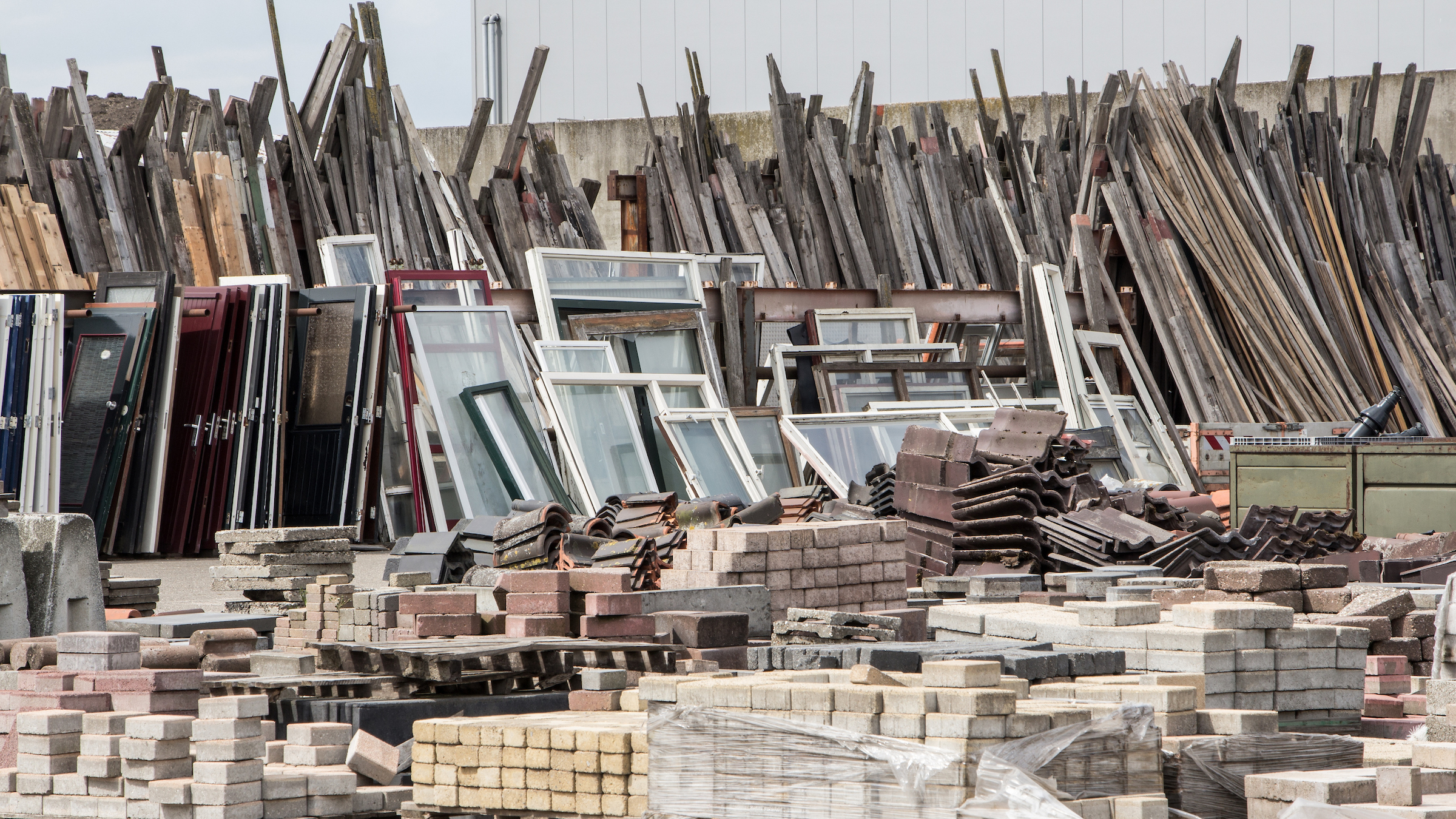
A CCH is a physical site or digital platform (or a combination of both) that allows the exchange of a range of materials, either for free or at a cost, to be used for what they were originally manufactured for. CCHs aim to increase the recovery and reuse of building materials through collecting, assessing, storing, refurbishing and redistributing them, helping businesses to navigate rising costs and develop more resilient supply chains
Approach in Scotland
Zero Waste Scotland is leading Scotland's CirCoFin showcase and is the only national-scale pilot. The project is exploring which CCH models which are best suited to Scotland, as well as developing a national roll out strategy proposal.
During the feasibility phase, Zero Waste Scotland engaged stakeholders across the built environment sector and undertook research including construction and demolition data mapping and material flow analysis.
The findings from this research are informing hub design, business development and investment planning activities, providing the foundation for future implementation across Scotland.

Market conditions
A successful CCH needs a supportive ecosystem around it, including sufficient material supply, customer demand, infrastructure, and coordination. While current construction reuse rates remain low, growing awareness of circular practices, supportive policy frameworks, and market pressures such as material cost volatility are creating new opportunities.
Our research shows stakeholder support for construction material reuse and the development of CCHs in Scotland. Stakeholders noted that a CCH would need to have a role in addressing systemic barriers, which include quality assurance, standards, logistics, skills, financing, and limited market awareness.
By providing the infrastructure and resources needed to support reuse, alongside policy and regulatory drivers, CCHs could help tackle the market barriers for scalability.
Location appraisal
The feasibility study included a two-stage location appraisal to shortlist suitable areas for an initial Circular Construction Hub (CCH) pilot and future regional hub and spoke network. This was intended to identify which areas of Scotland had the most suitable infrastructure, economy and supporting policies, to increase the likelihood of a successful pilot.
A multi-criteria analysis assessed all 32 local authorities against social, environmental, economic, logistics, development, and material opportunity factors. This resulted in North Lanarkshire, Glasgow City, and Falkirk emerging as the strongest candidates to take forward for further analysis.
For these three areas, additional analysis using place-based stakeholder engagement and desk research assessed each according to five success criteria:
- Material flows
- Growth in construction businesses
- Awareness
- Supportive policy conditions
- Fit with economic development ambitions
Glasgow City and North Lanarkshire demonstrated the strongest potential as initial locations and will progress to the next phase, while longer-term plans for upscaling and roll out will continue to consider other areas.
Location of shortlisted local authority areas:

Circular Construction Hub models
Scotland's CirCoFin showcase is following a pilot-first approach, which is intended to support initial hub pilots in key locations, and then scaling these activities combining physical and digital infrastructure within a growing hub-and-spoke network of interdependent hubs. Based on the four design elements (operational, technical, financial and business) we developed three models. These are:
- Circular Market Hub
- Circular Distribution Hub
- Circular Heritage Hub
Research has indicated that some level of public financial support is likely to be required in the early pilot stages, due to levels of perceived risk associated with investing in new and innovative circular economy business models. Other forms of impact driven investment such as crowdfunding or green bonds may also provide support.
Initial CCH customers are likely to be DIYers, self-builders, SMEs, and heritage building projects. Developers and contractors are not likely to be customers during early stages of development, but could be key material suppliers through donations and surplus stock.
Explore the three Circular Construction Hub models below.
Circular Market Hub
A retail focused, customer facing marketplace where reclaimed and surplus construction materials are sold directly to DIYers, self-builders, small contractors and the general public. Glasgow City identified as the strongest location to host this model given its large population, high concentration of construction activity, and city location.

Circular Distribution Hub
A logistics and wholesale centre receiving large volumes of materials from contractors and developers, for distribution to local businesses/projects, providing a consistent material supply and demonstrating the wider social and environmental benefits of reuse. North Lanarkshire may be better suited to this model given availabilty of larger sites and logistical networks.

Circular Heritage Hub
A specialist hub dedicated to the recovery, preservation and supply of traditional and historic building materials for repair and conservation. Supporting homeowners, contractors, conservation organisations, local authorities and designers in the repair of historic buildings, it provides access to reclaimed heritage materials. Glasgow City or North Lanarkshire are potential locations.

National upscaling
Through the Scottish showcase, our ambition is to prepare a CCH upscaling pathway leading to a national network of CCHs and related reuse businesses. This network would include new and existing reuse businesses, helping to build a diverse ecosystem of hubs and related businesses and initiatives serving local needs.
Our findings suggest growth, beginning with a pre-seed CCH pilot to test operations, build partnerships and establish supply chains. Future phases would then see local "spokes" added through collaboration with existing businesses and reuse initiatives, creating coordinated regional networks, which could then be replicated across Scotland to form a national hub-and-spoke system.
We will also explore opportunities in areas which may have supportive conditions for future CCH activity, including potential opportunities in urban, rural, and island communities, ensuring any final model complements, supports and collaborates with the excellent work already being undertaken across the sector.
