
Building the skills needed for a circular economy through internships
Developing the right skills for your business has never been more important in the fast-evolving world we live in.
In this series of case studies, we tell the story of those who have successfully completed the Circular Economy Internship Scheme, helping businesses and employees develop the skills needed to deliver a circular Economy in Scotland.

Turning environmental ambition into action
After graduating from the University of York with a degree in Environmental Science, Joseph Quance found himself at a crossroads. Following a period of personal loss, he spent time rebuilding his confidence while working in hospitality, unsure of where his career would lead next. What he did know was that he wanted to contribute to environmental change.
That opportunity came through a Circular Economy Business Support Internship with Inverness and Cromarty Firth Green Freeport. Drawn by the prospect of supporting renewable energy development in the Highlands, an area he had long felt connected to, Joseph saw the placement as a chance to make a meaningful difference while gaining valuable experience.
"As I looked into the role, I realised it wasn't just about renewable energy," says Joseph. "It was also about creating opportunities for communities. If you can support the environment while creating jobs and helping areas thrive, that's something worth being part of."
Building the case for GRP recycling in the Highlands
As an Environmental Innovation Intern, Joseph was encouraged to identify and develop a project that could support the circular economy in Scotland. Through discussions with ports and industry stakeholders across the Highlands, he became interested in a growing challenge: finding sustainable end-of-life solutions for fibreglass materials.
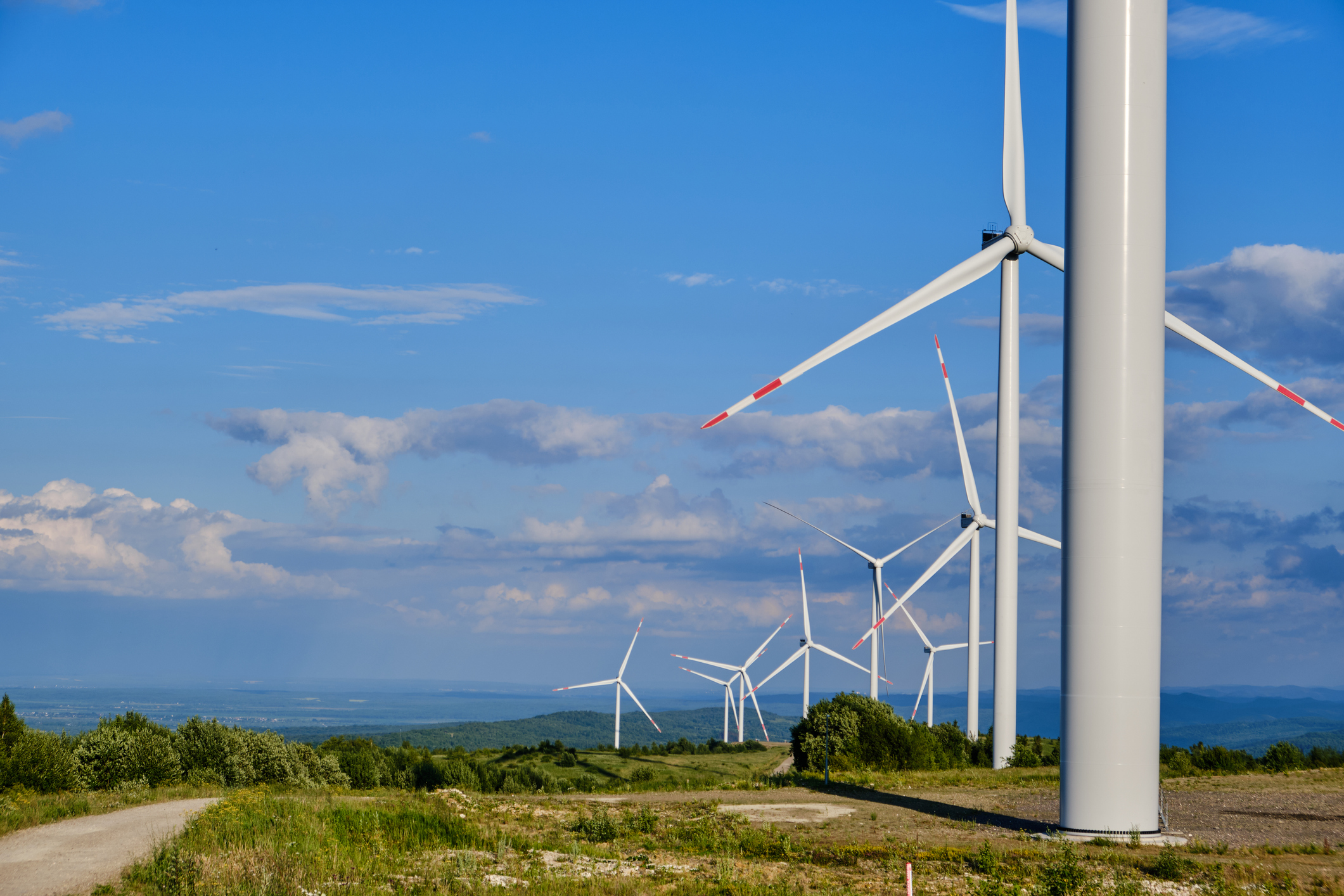
Many wind turbine blades and marine vessels are made from glass reinforced plastic (GRP), a durable composite material that is notoriously difficult to recycle. Joseph's research focused on assessing the viability of a GRP recycling facility in the Highlands, examining potential supply, demand and stakeholder interest. His findings suggested there was a strong business case for developing local recycling infrastructure, helping to keep valuable materials in use rather than sending them to landfill or incineration.
From internship experience to industry opportunity
"Joseph's internship showed what can happen when talented people are given the opportunity to apply themselves in a real-world setting," says Alli Vass, his manager at Inverness and Cromarty Firth Green Freeport. "He brought energy, curiosity and a different perspective to the team, and his work added genuine value to several projects. For me, it's a reminder that building our future workforce isn't just about filling skills gaps, it's about creating opportunities for people to contribute, grow and see a future for themselves in the Highlands. Joseph is a great example of what can be achieved when those pathways exist."
The project gave Joseph first-hand insight into circular economy principles, particularly the importance of retaining value in materials for as long as possible.
Alongside his main project, Joseph contributed to a successful funding bid for a renewable energy education facility, visited major renewable energy sites across the region, and worked on projects exploring how digital technologies could improve efficiency in ports. These experiences broadened his understanding of the skills needed to support the transition to a more circular economy, from research and analysis to stakeholder engagement and communication.
Building skills, confidence, and a career
Perhaps the biggest development, however, was his confidence.
"Learning how to communicate professionally and build relationships was probably the biggest thing I gained," he says. "The placement helped me realise that your voice matters and that you do have something to contribute," Joseph explains.
That confidence proved invaluable. Shortly after completing the internship, Joseph secured a role as Environmental Sustainability Coordinator with Balfour Beatty, working on major energy infrastructure projects in the north of Scotland.
Looking back, he believes the internship played a crucial role in helping him take that next step.
"Without it, I don't think I'd even have applied. The experience showed me I had far more to offer than I realised."
How the placement helped shape Joseph's future
Balfour Beatty has seen first-hand how the experience Joseph gained through his internship has supported his transition into the industry.
"Joseph's journey highlights the value of creating opportunities for people to develop practical skills, build confidence and apply their knowledge to real-world challenges," says Joanne Mackenzie, Environmental Sustainability Manager at Balfour Beatty.
"The experience gained through his internship provided a strong foundation for the next step in his career, helping him develop the skills and confidence that he now brings to his role with Balfour Beatty."
Interested in understanding the circular economy skills within your organisation?
For businesses exploring circular ways of working, access to the right skills is becoming increasingly important.
To understand your organisation's strengths and identify opportunities to build circular economy capability, explore the Circular Economy Skills Assessment Tool on the Business Information Hub.
