
Building the skills behind circular innovation
Developing the right skills for your business has never been more important in the fast-evolving world we live in.
In this series of case studies, we tell the story of those who have successfully completed the Circular Economy Internship Scheme, helping businesses and employees develop the skills needed to deliver a circular Economy in Scotland, while also providing precious experience.

Applying circular economy knowledge in industry
Working within a community reuse project had shown Nina the value of keeping products and materials in use for longer, but she was looking for an opportunity to apply her academic knowledge in a more technical setting and develop the skills needed to build a career in the environmental sector.
That opportunity came through Zero Waste Scotland’s Circular Economy Business Support Internship, where she secured a placement with SEM, a Scottish resource recovery technology company.
SEM was exploring new ways to create value from by-products generated by the food and drink industry, transforming organic materials into innovative products. For Nina, the project offered a chance to see how circular economy principles extend beyond waste reduction and recycling to include innovation, product development and resource efficiency.
Developing the skills behind circular innovation
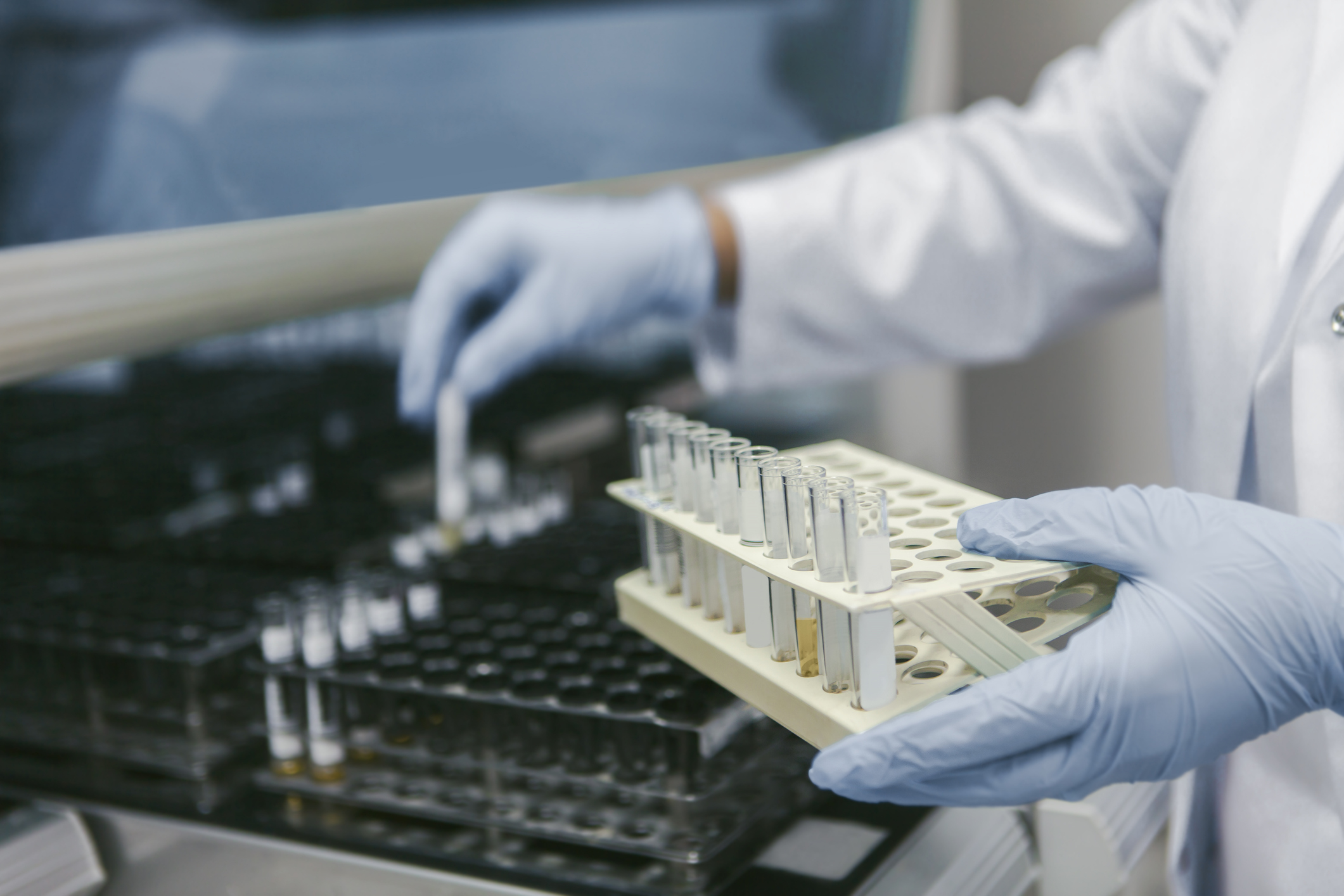
Her internship focused on investigating higher-value uses for recovered materials. Working in a laboratory environment, Nina was tasked with testing and comparing different approaches and formulations, to assess their suitability for further development.
Within the project’s agreed objectives, Nina had scope to shape her approach and prioritise areas for investigation.
"I was given the overall goal, but I had to decide how to approach it," Nina explains. "I was able to look at the results, decide which areas were worth exploring and prioritise what would have the biggest impact during the placement."
That level of responsibility helped develop one of the most valuable circular economy skills: problem solving. Circular innovation often means working with new materials, testing unfamiliar ideas and adapting when results do not go as planned. Nina's role required her to continuously assess evidence, refine her approach and make informed decisions about where to focus her efforts.
Building technical expertise through research
Alongside laboratory testing, she developed a broad range of technical and transferable skills. She learned new scientific methods, gained experience in chemical and physical analysis, and strengthened her ability to collect, manage and interpret data. She also used specialist software to visualise results and identify patterns that could inform future product development.
One of the biggest lessons from the internship was the importance of documenting knowledge effectively.
Scientific innovation depends on accurate record-keeping, particularly when projects are exploring new products and processes. Nina developed strong skills in maintaining detailed laboratory notebooks, recording observations and creating clear documentation that allowed others to understand and build on her work.
"Keeping detailed records was a huge part of the project," she says. "You need to make sure somebody else can understand exactly what you've done and continue the work if needed."
Growing confidence through responsibility
The placement also strengthened her ability to manage competing priorities. With only 12 weeks available, she had to make the most of every opportunity, balancing multiple experiments while ensuring testing was carried out accurately and consistently.
Those experiences helped her understand that circular economy work is not only about environmental outcomes. It also requires strong technical capability, analytical thinking, planning, communication and project management skills.
Perhaps most importantly, the internship gave Nina confidence. Being trusted to lead elements of the project and make decisions independently helped her recognise the value of the knowledge and skills she was developing.
"I really enjoyed having ownership over the project. Being trusted to take it forward helped build my confidence and showed me I was capable of doing that kind of work."
How the placement helped shape Nina's future
The placement became an important stepping stone in her career. After the internship, Nina returned to SEM for additional laboratory work, further developing her technical expertise while completing her studies. Nina credits the experience with strengthening the practical skills and confidence she brought to her subsequent career as an Assistant Scientist with the Scottish Environment Protection Agency (SEPA).
Today, she works in environmental monitoring, analysing water samples for a wide range of contaminants. Many of the skills she uses every day, including laboratory techniques, data analysis, quality assurance, record-keeping and problem solving, can be traced back to the experience she gained during her internship.
Her contribution also supported SEM's wider work exploring new applications for recovered nutrients.
"Nina worked within our laboratory team, testing and evaluating growing media formulations using nutrients recovered through our H₂OPE technology," says Grant Leslie, Co-Founder of SEM.
"This research forms part of SEM's wider work to explore new applications for recovered nutrients.
"H₂OPE is designed to recover nutrients and water from digestate and other globally challenging organic waste streams, with the potential to create valuable inputs for agriculture and horticulture.
"We appreciated her support and wish her every success in her career."
‘Just as important as academic studies’
Looking back, Nina believes practical experience was just as important as her academic studies.
"The internship gave me the experience I needed. A degree gives you knowledge, but being able to apply it in a real workplace environment makes a huge difference."
Nina's experience demonstrates how building circular economy skills goes far beyond understanding environmental concepts. Whether developing new products, creating value from underused resources or supporting innovation, organisations need people who can analyse data, manage projects, solve problems and translate ideas into practical solutions.
Interested in understanding the circular economy skills within your organisation?
For businesses exploring circular ways of working, access to the right skills is becoming increasingly important.
To understand your organisation's strengths and identify opportunities to build circular economy capability, explore the Circular Economy Skills Assessment Tool on the Business Information Hub.
