Rhinowash: Circular thinking is good for the economy
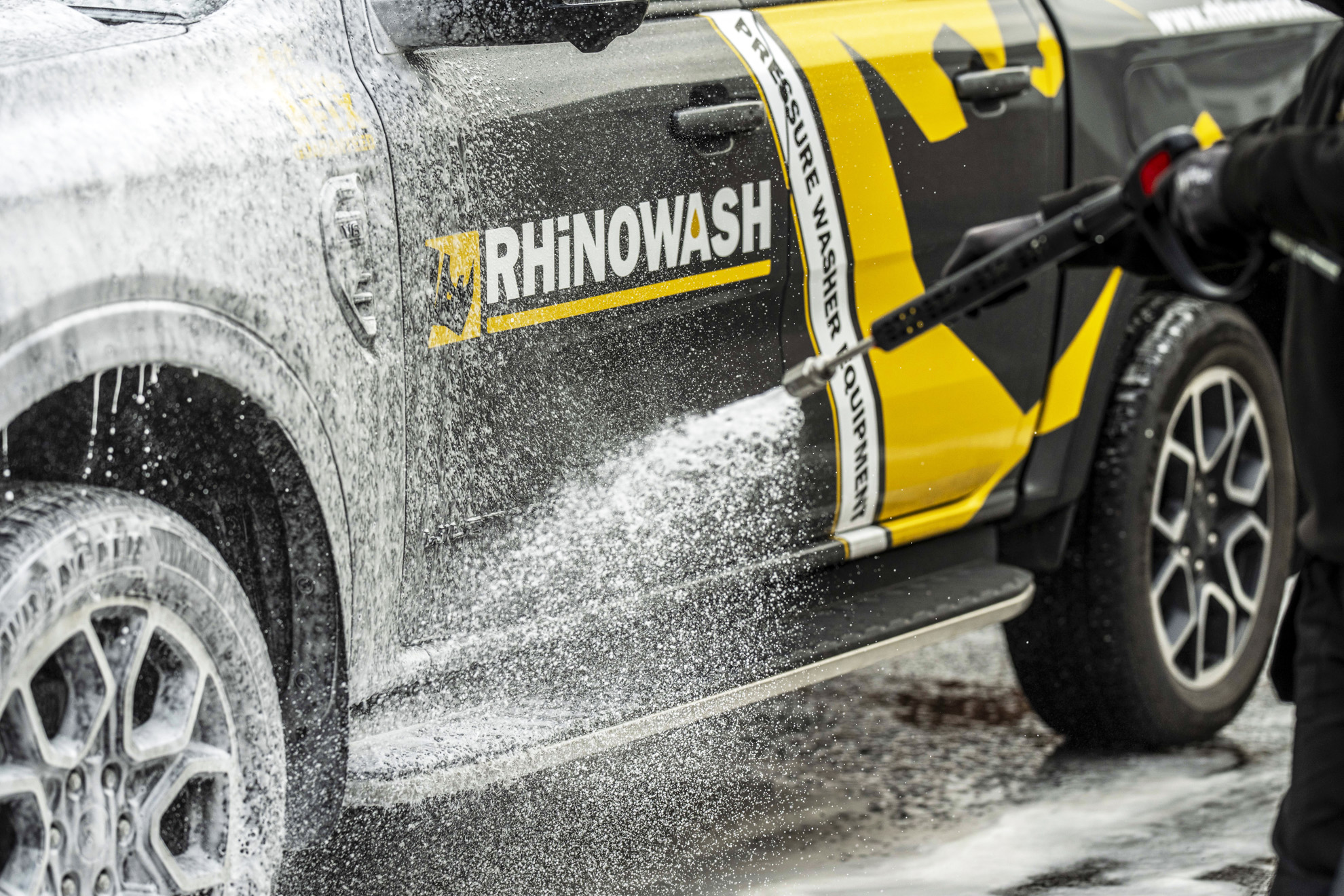
The history of Rhinowash, the industrial pressure washer specialist, may stretch back more than 50 years, yet circularity has always been at the heart of its approach – and is key to its future.
Design. Modularity. Remanufacturing.
The story of Rhinowash goes back to 1975 when Mark’s father, Denis, set up a business called Power Washing Plant Hire. But such was his dissatisfaction with the quality of industrial power washers on the market that he moved into designing and manufacturing his own models. The company then changed its name to Scotkleen, before rebranding as Rhinowash in 2009.
“Our father’s goal was always to provide industrial products that are reliable, robust and fit for purpose, but which can also be easily repaired and put back into use,” says Mark, who now runs the company with his brother John. “And that remains our goal today. We’re fortunate that the principles of good-quality British engineering and design have always been at the forefront of what we do. We’ve always focused on manufacturing industrial equipment that’s built to last.
“For us, it was a natural step to bring equipment back from the field, rework it ourselves, and put it back out to meet customer demand,” he adds. “That’s where this all began. We realised we had a product that aligned well with remanufacturing principles and that the path we had taken was the right one in terms of sustainability, and commercially – both things have to work together.”
Today, Rhinowash is a business of around 30 people. “Customers include plant construction, local authorities and transport operators,” says Mark. “Anyone running fleets, vehicles or plant equipment as part of their daily operations typically needs our solutions.”

Moving to a new lease model that everyone benefits from
But the business is also currently undergoing a transition as it moves to a Product as a Service (PaaS) model. In other words, as well as buying Rhinowash industrial washers, you can now also lease the equipment, enjoying the benefits of a comprehensive product care service.
“The biggest benefit is stability – for everyone,” says Mark. “Instead of peaks and troughs in sales, PaaS provides predictable, long-term income for us, which benefits our employees, suppliers and customers. And also for our customers – especially local authorities – fixed costs are crucial. PaaS removes the risk of unexpected maintenance costs, making budgeting far more predictable.
“The ownership remains with us, so the client no longer has the concern of looking after the asset. And it's in our interest to maintain the product to a high level. The service has to be as good as the product – we’re proactive and rigorous in ensuring that our customers get maximum life and value from the washers.
“A lot of people know that sinking feeling of buying a new car and then driving away from the showroom knowing it has immediately devalued. But with PaaS, we are providing the very opposite – the clients know that the product will be regularly upgraded and maintained, and that they are covered by our 24-hour first time fix guarantee.”


Remanufacturing ensures that any flaws are engineered out
Mark also believes that the Rhinowash focus on modular design and remanufacturing makes its products more robust because any faults or flaws have been engineered out. “Another big advantage is that you have control in-house rather than being reliant on ordering spare parts from further afield,” he says. “That ability to remanufacture brings significant resilience to your supply chain and your ability to support your clients.”
All Rhinowash equipment is manufactured in the UK, and the star of the company’s fleet is the Rhino One. “The key difference is that, from inception, the full intention with Rhino One has always been for it to be a completely remanufacturable piece of equipment, which is quite an unusual proposition. Every component can be replaced or remanufactured and we've future-proofed it with the understanding that technology is going to change in the future. Importantly, it also provides carbon impact data that clients can use for their assessments.”
Being at the forefront of change is exciting, but it can also be lonely
But a forward-thinking vision also brings its challenges. “Being at the forefront of change is exciting, but it can also be lonely,” says Mark. “You’re trying to break barriers while navigating old ways of doing things.” He points to issues with standard procurement processes that don’t account for new approaches such as PaaS. “These contracts are long-term – 10 to 15 years – which is a different way of thinking for many customers, but it brings stability for both sides.”
Then there is the challenge of investing in the kit for hire. “I'm not going to sugarcoat it,” says Mark. “Because of the upfront cost and the challenges of securing finance, the transition to a PaaS model is not an easy one for an SME.”
Securing that finance to scale up further is the current priority for the business, but Mark and John believe it’s a sensible route for Rhinowash – and that circular thinking brings greater financial sustainability for everyone. “It brings the reassurance of greater predictability for the business,” he says. “That makes things more secure for the people who work here, and the supply chain. And when that’s replicated across Scotland, it has to be good for the economy in general.”

What advice can Mark give to any business looking to move to a circular model?
Keep it simple, and start small. Look for areas where you can make easy wins, and ensure that what you commit to is sustainable. We now have a fully remanufacturable product but that wasn't where it started. It began with simpler things that we knew we could control and then, when you can see the impact you’re beginning to make, it spurs you on and you begin to identify bigger steps you can make to do things better.