POTR: The plant pot that changes everything
A lockdown project to revolutionise the humble plant pot has flourished into a strong commercial proposition and million-dollar investment for husband and wife team Andrew Flynn and Eilidh Cunningham, founders of Glasgow-based POTR.
Innovation. Investment. Expansion.
When Andrew Flynn received his first orders from Japan, there was a startling revelation. He was confident that his self-watering, flat-pack plant pots – made from recycled plastic and assembled using origami – would appeal to the Japanese market. But now the commercial impact of his design was becoming apparent.
“The client had been looking at a competitor with a standard plant pot,” he says. “On one pallet, they’d get 100 traditional pots. But with the POTR design, you can put 4,000 on a pallet. That cut the shipping cost from around £30,000 to £600. Plus the carbon footprint is a tiny fraction of what it would have been, and there’s no chance of breakage. You could throw these off the Eiffel Tower, and they’d be fine.
Perfect for e-commerce
“The pots are also perfect for e-commerce. They fit through a standard letterbox, so customers don’t need to be home. That saves on postage, reduces missed deliveries, and again cuts the carbon footprint. And all of our products are self-watering, which makes caring for the plants super simple.”

The original idea
The POTR adventure began during lockdown when a gift arrived for Andrew and his wife Eilidh. “We received three traditional plant pots through the post,” says Andrew. “They arrived in a big box with loads of bubble wrap. And yet two of the pots had smashed into a thousand pieces. That got us thinking.”
Drawing on Andrew’s background in design and engineering, and Eilidh’s experience in marketing, the pair began to wonder if they could use flat-pack techniques to fit a plant pot into an envelope. Initial curiosity developed into an enthusiastic obsession and the pair pitched their idea on crowdfunding platform Kickstarter in 2020. Asking for just £600 for prototype orders, the couple were staggered to receive £30,000 in just 15 days. “It was amazing but immediately gave us the problem of how to deliver such a huge quantity,” says Andrew.


Funding success
After COVID-related delays, the POTR website went live in early 2022, and much has happened since. Later that year, they won £100,000 through the Scottish Edge Circular Economy Award. “That was massive for us and it's not just the funding aspects that are great – it's the network of people that you’re introduced to.”
Manage the supply chain
But there have been challenges. “We tallied up what it would cost to set up our own factory and it's in the hundreds of millions of pounds, so production has to be outsourced,” says Andrew. “And one of the biggest challenges has been the vulnerability of the supply chain due to tough economic conditions. In our short history, we've seen seven manufacturers go out of business, so we always have a backup in place. We also need to ensure that our supply chain is in line with our thinking on sustainability and ethics, so we do as much as we can in the UK so that we can see how things are managed on site.”
R&D is key
A big focus of daily business at POTR’s Glasgow HQ is R&D – a process that has seen them whittle down the width of their pots to just 0.25mm of recycled polypropylene, and prepare a new range of products for launch in 2026.

Public profile
And as marketing director, Eilidh has been a key part of the success, developing the brand’s appeal across social and traditional media. For instance, in 2024, their pots won the Sustainable Garden Product of the Year Award at the Chelsea Flower Show – and glowing praise from sustainability champion and TV ‘dragon’ Deborah Meaden.


Strong business case
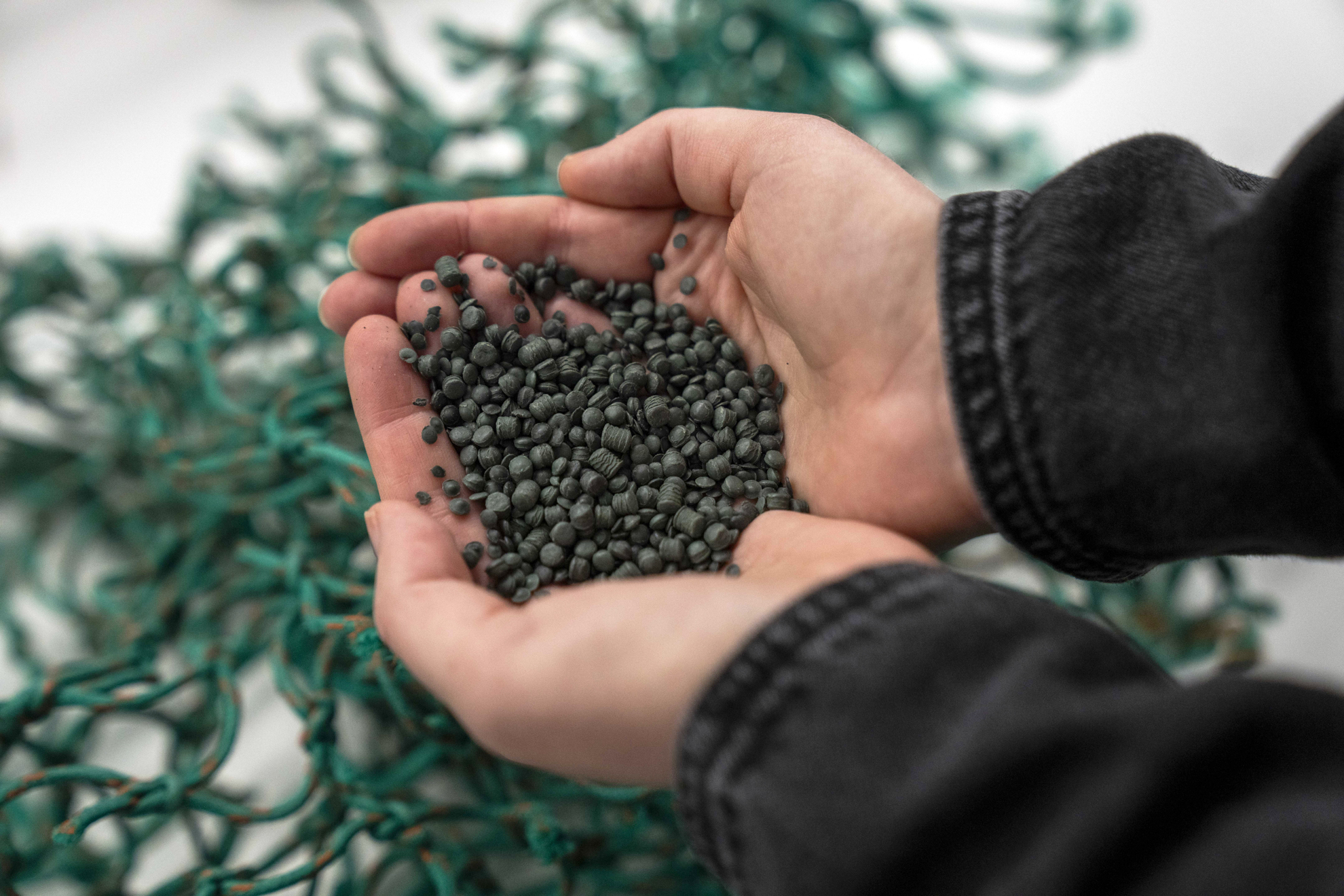
They then teamed up with Waterhaul UK, a Cornwall-based social enterprise that removes waste plastic from the coast. POTR is now turning that plastic into its Ocean Pot range and customers can scan a QR code on the packaging to discover which beach the plastic was found on. “It’s the story around the sustainability that’s interesting,” says Eilidh. “It’s not enough to say you’re sustainable, there has to be something that resonates.” And as Eilidh and Andrew have shown, there has to be a strong business case – a product offering that is more commercially attractive than the traditional alternatives.
Attracting investment
Returning to Chelsea this year, POTR won the Sustainable Business of the Year award – and found its first major investor. “We met them by chance,” says Andrew. “They loved what we were doing so much that they offered to invest right there on the stand. That initial offer turned into an investment of approximately one million dollars and, just as importantly, a brilliant partnership.”
Product development
POTR (the name is a play on ‘pottering in the garden’ and ‘pot plus recycle’) now has around 400 retail stockists but its biggest client globally is Bloom & Wild, the letterbox flowers company, which now also sells a POTR flat-pack vase. “But our vision goes beyond houseplants,” adds Andrew. “We’re exploring how people can grow more at home – products that contribute to nutrition, wellbeing, and even food security. We can’t wait to make that vision a reality.”

“You have to do your homework”
Andrew’s advice to circular economy businesses seeking investment:
“Investors, especially in the UK, are actively looking for circular economy companies. Our authenticity and engineering-led approach really resonated with them – that got us over the line. But we also learned early on that finding the right investors isn’t just about money, it’s about shared values. We got lucky, but we also did our homework to understand who aligns with our vision. That makes all the difference when you’re building something for the long term.”