ACS Clothing: They wear it well
A North Lanarkshire business is combining advanced technologies (including AI, automation, robotics, and nanotechnology) with circular economy principles to drive expansion and give new life to unwanted clothing.
Growth. Innovation. Collaboration.
“Collaboration is very important to us,” says Michael Cusack, Chief Sustainability Officer at ACS Clothing Ltd. “I see the future of ACS as part of a consortium for positive change. We invest a lot in making every aspect of our operation as circular as possible. There’s real purpose behind the business – we feel we’re doing something truly positive and meaningful. And in three years’ time, with the growth of Extended Producer Responsibility (see below), I see this consortium of interests being a hundred times the size it is now.”
Change of direction
ACS has come a long way from its origins as a Highland wear rental shop in Glasgow. Founded in 1997, the business grew into other areas of clothing hire and, in 2017, attempted to expand into the US. However, when that stalled, investors turned the business over to the management team, who identified fresh opportunities. “We recognised that the circular economy was the future,” says Michael.
The team realised that the firm’s expertise in extending the life of Highland wear had wider applications in a clothing market being transformed by changes in technology, customer expectations and the policy landscape.

Hi-tech cleansing
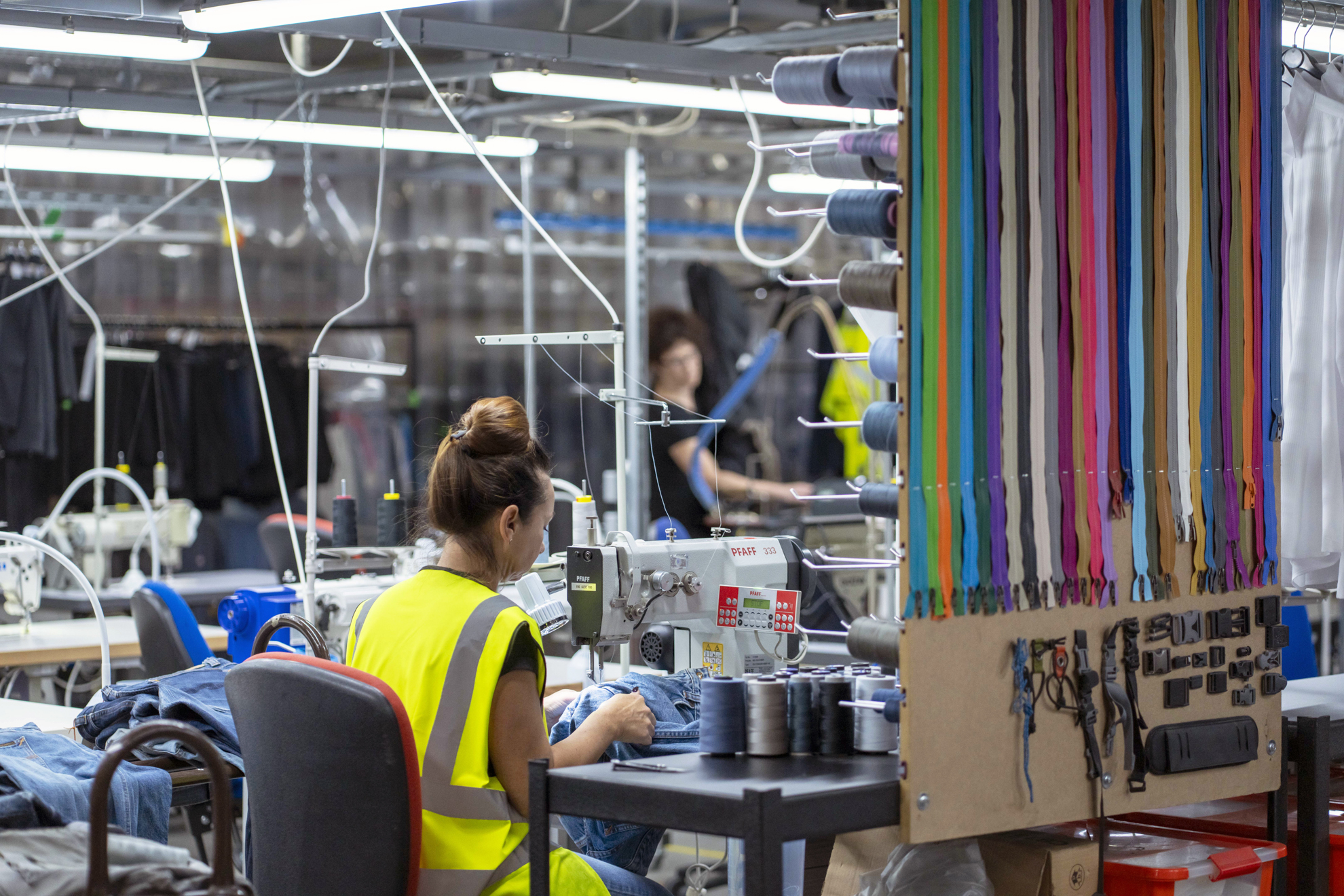
“We now provide a sanitising, cleaning and repair service for thousands of garments on behalf of our clients, including many well-known brands,” explains Michael. ACS receives the clothing directly at its Motherwell premises through links on the client websites. On arrival, a discreet tag is attached to each item, allowing it to be tracked throughout the process. An ozone sanitisation chamber (which can manage 30,000 garments a day) removes odours and bacteria. Garments with marks or stains are then cleaned by the team’s stain removal specialists. The process is designed to keep the use of water and energy to the bare minimum.
Following any minor repairs, the garments are moved through a steam tunnel, then bagged in protective polythene (100% recycled at source). ACS has the capacity to then store up to three million items. With an increasing use of AI to improve speed and accuracy, the company also manages the posting of images and product details on websites such as eBay, Depop and Vinted, and then automatically dispatches the garments as soon as they’re ordered.

Market innovation
By extending the life of discarded clothing, ACS is making its presence felt in a sector flooded with garments that are often thrown away after minimal wear. With innovative sterilisation, cleaning and repair techniques, the firm has developed a hi-tech, low-waste process for giving thousands of items a second life through resale or rental.


Sharing knowledge
As a passionate champion of the circular economy, Michael amplifies the impact of ACS through collaboration. “We work closely with organisations such as Zero Waste Scotland, Skills Development Scotland, Scottish Enterprise, and more than 20 universities and colleges,” he says. “We’re also members of the Ellen MacArthur Foundation, UK Fashion & Textile Association, and the United Nations. Sharing knowledge is fundamental to how we accelerate change.”
Focus on growth
By consciously switching to a circular business model – and embedding wider sustainability practices such as reusable packaging, replacing plastics with regenerative alternatives, conserving water, and reducing energy use – ACS has re-energised the business with a clear, future-focused pathway for growth.
And there is more in the pipeline. When we spoke to Michael, he was already developing an entirely new business focused on circular solutions for workwear, uniforms, and PPE – items that would otherwise be incinerated at end of life. Looking ahead, ACS is now exploring how to fully close the loop by shredding end-of-life textiles and transforming them into new products, such as building insulation, ensuring materials remain in productive use for as long as possible.
“It’s about the revenue”
Michael believes the circular economy is now being driven less by good intentions and more by hard business logic. “For a long time, the big players viewed circularity through the lens of corporate social responsibility – as a nice thing to do,” he says. “But with Extended Producer Responsibility and a growing political focus on sustainability, real change is being forced into the system.
“The rental model works exceptionally well. It’s not about the one-off hit of a sale; it’s about the revenue generated over the lifetime of an item. The garment becomes an asset rather than a product. As you gather more data through tools like Digital Product Passports, you gain a deeper understanding of each item’s lifespan and residual value. And as volumes increase, costs come down.”


“Pick some easy wins”
What is Michael’s advice to any organisation wishing to embrace circular practices?
“The first thing is to start small. Pick some easy wins. You've got inputs, you've got a process and you’ve got outputs. Think about how you can start to reuse some of the outputs that are going to waste. And build up enthusiasm in the team so that everyone sees the value in what’s happening. As soon as you start getting into it, you’ll probably realise that a lot of the existing skills you have across your team are really useful for adapting to a circular model.”
Extended Producer Responsibility is the drive to ensure that producers bear responsibility for the environmental impacts of products they place on the market, and are incentivised to reduce these impacts.
- Zero Waste Scotland